

Thursday 12th March 2026
Surging oil and gas prices are forcing UK businesses to rethink how they power sites, projects and events, as conflict and geopolitical tension add fresh volatility to global energy markets. For operators already working on tight margins, the latest spike in fuel costs is sharpening questions about how long diesel‑led power can remain viable.
UK pump prices are already moving back up, with average petrol now around 138p per litre and diesel at roughly 153p, compared with record highs of just over 191p for diesel in 2022. At the same time, many commercial sites taking delivery of diesel direct to site are already paying around £2.20 per litre today, with prices expected to continue rising in line with further wholesale increases. This means the cost pressure facing operators reliant on diesel generators is in many cases already significantly higher than forecourt prices suggest.
From construction compounds and remote infrastructure to festivals and film sets, many operations still depend on generators running for long hours just to keep basic services going. As fuel costs climb and pressure mounts to cut emissions, more organisations are exploring alternatives that can reduce consumption without sacrificing reliability. Among the options gaining ground are battery energy storage systems (BESS) and hybrid power, which are already helping businesses cut diesel use significantly, while laying the foundations for even deeper savings over the longer term.
Industry specialists say this shift was already under way but has been accelerated by the current energy environment. In sectors with high temporary or off‑grid demand, even modest percentage reductions in fuel use can translate into significant savings over the life of a project, while also easing exposure to supply disruptions.
Andy Richardson, CEO of Mansfield‑based hybrid power specialist Power Saving Solutions, said rising prices are speeding up that change in mindset.
“Fuel prices are already rising as a result of global events, and businesses that rely on diesel generators are beginning to feel that impact,” he said. “We’re seeing more organisations move quickly to lock in savings and reduce their risk, rather than waiting to see how bad the next spike might be.”
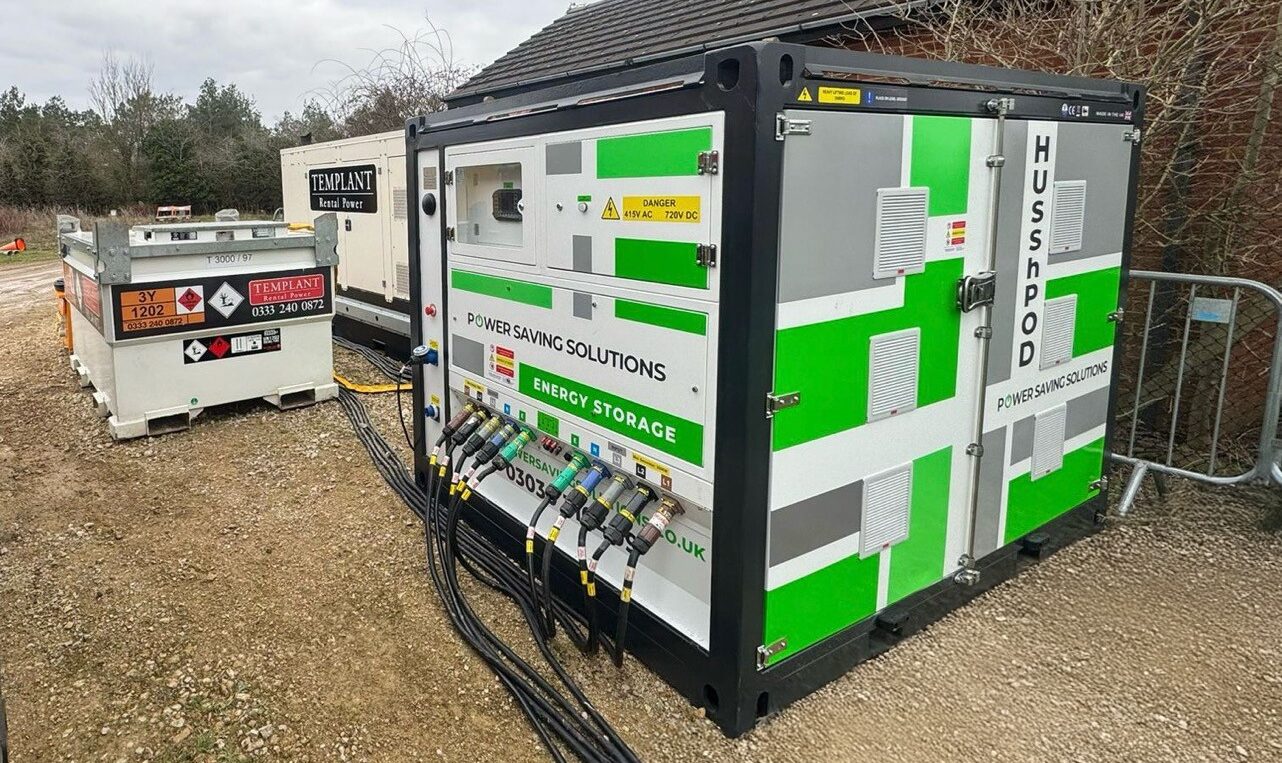
Unlike traditional standby systems that sit in the background until the power fails, modern battery units on commercial and industrial sites are increasingly configured for continuous use. In a typical hybrid setup, the battery system supplies most of the day‑to‑day load, with a generator running fewer hours to recharge the batteries when needed. This reduces fuel use, engine wear and servicing costs, and makes it easier for businesses to forecast energy costs over the life of a project.
Richardson continued: “Hybrid power solutions that combine generators with battery energy storage significantly reduce fuel consumption and generator run time, which directly lowers operating costs. As fuel prices continue to climb, the financial case for hybrid systems only becomes stronger, both in the short and long term.”
Sectors with high temporary or off‑grid demand are among the first to move. Construction firms are increasingly using batteries to run site cabins and welfare facilities more efficiently; event organisers are under pressure from audiences and local authorities to cut noise and emissions; and operators of remote infrastructure are already adopting BESS to reduce their reliance on diesel deliveries as they become more expensive or less reliable.
For many businesses, the issue is increasingly framed as one of resilience as well as cost. Energy resilience is moving rapidly up the agenda as fuel markets become more volatile. It is no longer just about having a backup plan for blackouts, but about how sites are powered day in, day out in a way that uses less fuel and gives operators more control when markets are unpredictable.
Hybrid systems and BESS will not remove exposure to global fuel markets altogether, but advocates argue they can give businesses greater flexibility and resilience by lowering overall consumption and reducing how often generators need to run. For organisations facing tightening budgets and tougher environmental expectations, that may be enough to make 2026 the year they finally move away from diesel‑only power.